

New York Post, Syndication, Unique Homes, Video
Historic New Jersey Home Asking $895K Was Once a Buzzy Revolutionary War Tavern—Which the British Stormed
Apr
In 1778, British troops stormed into Pilesgrove, New Jersey’s Seven Stars Tavern, a busy stop along Kings Highway, then an important Colonial route linking the northern and southern halves of the state.
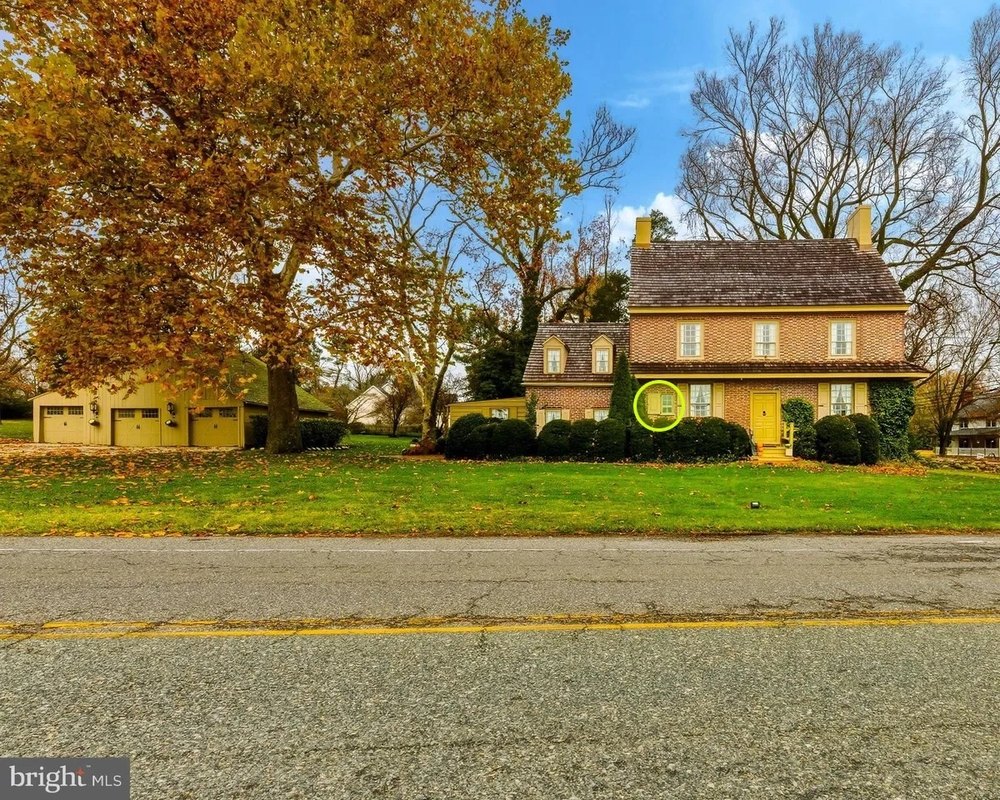
Today, the two-story brick building at 1349 Kings Highway is a four-bedroom, three-bathroom residence listed for sale, asking $895,000. But in the late 18th century, it functioned as something far more dynamic: a tavern, a stagecoach stop and an informal information hub, where locals and travelers alike passed through its doors—and in some cases, never left.
The Seven Stars Tavern, built in 1762, was designed for both function and flow. A now-rare feature still hints at its past life: a low window built into the front facade, where food and drink could be handed directly to coachmen and riders without requiring them to dismount.
Inside, the layout was open and accommodating, with large rooms that allowed for dining, drinking and conversation to unfold simultaneously.
Taverns like this were the connective tissue of early America, where news traveled faster by word of mouth than it ever could by print.
That made them strategic targets during the Revolutionary War.


On the night British troops descended on the property, their focus was John Louderback, the son of tavern owners Peter and Elizabeth. A known sympathizer of the American cause, John had allegedly been supplying provisions to Colonial troops. The Redcoats intended to make an example of him. But the Louderbacks got wind of the plan just in time. Before the soldiers arrived, John and his family fled into the surrounding farmland and woods.
Few homes manage to retain this level of architectural integrity while also carrying such a vivid historical narrative, and the dwelling was added to the National Register of Historic Places in 1776.


You also might find a more direct link to the past. According to New Jersey historian Charles S. Boyer, “probably more ghost stories are woven around the old Seven Stars Tavern than any similar building in the state.”
Stories persist of Peter Louderback’s spirit guarding buried valuables, a Tory spy who met a grim fate nearby—and even of a river pirate said to wander the halls.

The house itself bears the marks of both its age and its endurance. Constructed in a traditional Flemish bond brick pattern—a method prized in the 18th century for both its strength and visual appeal—the exterior walls are nearly a foot thick. Along the front facade, the original construction date and the Louderback family initials remain embedded in the brickwork, a direct link to its Colonial past.


Inside, original details abound, with wide-plank hardwood floors that stretch across the main living spaces, worn smooth by centuries of foot traffic. Hand-hewn beams frame the ceilings, and six fireplaces—three woodburning and three gas—anchor the home, offering both historical charm and modern comfort.
The kitchen has been updated to meet contemporary expectations, with stainless steel appliances, custom cabinetry and stone countertops, but it still opens into the older portions of the house in a way that preserves the building’s original flow.

Upstairs, the four bedrooms reflect the home’s layered evolution, with a mix of preserved architectural details and subtle modern updates. The three bathrooms have been renovated, balancing period-appropriate aesthetics with current functionality.
The property itself spans several acres, surrounded by farmland that reinforces the home’s sense of pastoral history. Outbuildings on the site add to its appeal, offering potential for storage, workshops or even adaptive reuse, depending on a buyer’s vision.
Despite its 18th-century origins, the home includes updated systems and a swimming pool, making it livable without sacrificing its character.
“You feel like you’re walking back in time,” said listing agent Rich Warner of Warner Real Estate & Auction Company.
Discover more stories. Read the latest real estate news at New York Post.
